
In his monthly Mann ki Baat broadcast, Modi noted that the country was also faced with several natural disasters, including cyclones, landslide and earthquakes, during the pandemic, and said more lives were saved than the past with the Centre, states and local administration coming together to carry out relief and rescue operations.

Trump had said a comprehensive trade agreement with India would take much longer to finalise than earlier expected.

'We will resist it.' 'Farmers will not let that happen.'

If eight states could join the VAT system much after the rollout date and after seeing how it works, why can't the same apply to states opposed to the farm laws, asks A K Bhattacharya.

Of these 8.5 million additional people employed in September, 6.5 million were in rural India, reveals Mahesh Vyas.

With almost all opposition parties and several trade unions backing the 'Bharat Bandh' and many announcing parallel protests in support of the farmers, the Centre has issued an advisory directing all the states and Union Territories to tighten security and ensure COVID guidelines are followed.
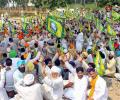
'Why did government not include a provision in the bills which categorically stated that no crop will be sold below the MSP in the open market?'

Winning an election may be a breeze for the BJP but the aftermath of victory isn't always painless.

Agriculture Minister Narendra Singh Tomar, and Railways and Commerce Minister Piyush Goyal on Thursday held a meeting at the Vigyan Bhawan with a delegation of farmers, including the leaders of several farm organisations holding protests in the national capital against the recent farm laws.

Farm loan waivers should not be regarded as expenditure but as incentive and investment, argues B S Raghavan, the distinguished civil servant.

The leadership of the powerful Congressional India Caucus has urged the Indian government to ensure that the norms of democracy are maintained.

The farmer representatives were unanimous in seeking repeal of the 3 laws.
The wholesale price index inflation is projected at 6.4 per cent for 2017-18.
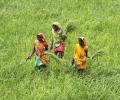
For the entire UPA regime, from 2005-06 to 2013-14, the average annual farm growth according to the GDP back series data is 3.8 per cent, which too is higher than the first four years of the NDA, though these two periods aren't comparable because one spans nine years and the other four.

About one-third of the world's poor live in India but there are countries where 88 per cent of population is extremely poor.

Here's the full text of President's Ram Nath Kovind's address to the joint sitting of both houses of Parliament on the first of Budget Session 2022.

At all India level, per capita income will decline by 5.4 per cent in FY21 to Rs 1.43 lakh, the report said.

Sanjeev Nayyar offers a roster of things to do to see the India of our dreams.

In yet another setback to it, the National Spot Exchange Ltd on Monday saw non-executive chairman Shankarlal Guru and another director quit, blaming 'bad people' in the management team for the crisis at NSEL.

Modi government is pushing GM food crops without adequate safety assessment and transparency, claim activists.
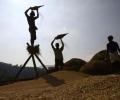
The agriculture sector has witnessed feeble growth on account of drought for two successive years

Deep down, Katragadda is still that boy who makes as well as sells soap

The earlier forecast expected to see 654 million working Indians overall by the fiscal year ending 2022.
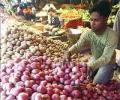
The country has produced a record harvest, but many farmers in the onion bowl of Maharashtra have lost a large share of their crop damaged in storage, adding to the country's inflation woes.
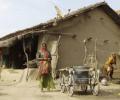
Just before the elections, the government waived interest on loans up to Rs 300,000 for farmers. But this may not really help small and marginal farmers in the state, who make up for two-thirds of the total and are still dependent on informal channels of credit.
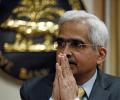
Uncertainty is emerging as the only certainty, said RBI Governor Shaktikanta Das as he emphasised on continued policy support at the December MPC meet during which members expressed concerns over spread of the Omicron variant of coronavirus, as per the minutes of the rate-setting panel released on Wednesday. After three days of deliberations, the six members of the Monetary Policy Committee (MPC) on December 8 unanimously voted for status quo on policy rates for the ninth consecutive time. At the meeting, the RBI Governor said risks stalking the global economy have amplified with rapid spread of the virus mutations, including the Omicron variant, leading to countries scrambling for restrictions.

Rashtriya Loktantrik Party convenor and Nagaur MP Hanuman Beniwal on Saturday announced a split from the Bharatiya Janata Party-led National Democratic Alliance over the Centre's new farm laws.
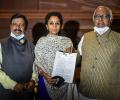
MPs from 10 Opposition parties on Thursday wrote a letter to Lok Sabha Speaker Om Birla saying that the situation at Ghazipur border was like that of India-Pakistan border and condition of farmers resembles prisoners in jail.

On Sunday, Rajya Sabha passed the Farmers' Produce Trade and Commerce (Promotion and Facilitation) Bill, 2020, and the Farmers (Empowerment and Protection) Agreement of Price Assurance and Farm Services Bill, 2020.

'Rather than cutting and pasting from advanced economies, we should use basic economic principles to think about what is right for India at the stage of development at which we are,' says Chief Economic Advisor Krishnamurthy Subramanian.

On Wednesday, the top court observed that the Centre's talks with the protesting farmers have 'not worked apparently' and were bound to fail, and said it will form a committee having representatives of both the sides, but the agitating leaders dismissed it as no solution.
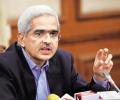
Softening inflation, Das said would make available more policy space to the central bank to address risks to the growth going forward.

Behind the movement are shock-workers functioning quietly to ensure that a seemingly spontaneous, apolitical, grassroots mobilisation sustains itself without dribbling into chaos or violence. Sai Manish lists some of them.

Joint Director (Extension) Indian Agriculture Research Institute, New Delhi, Baldeo Singh delivering the keynote address at the national seminar on 'Appropriate Extension Strategies for Management of Rural Resources' organised at the University of Agricultural Sciences here on Tuesday stressed that agriculture in India had become more challenging, competitive, demand-driven, knowledge-based and market-oriented.
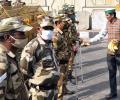
'They wil show the whole world see how this government is treating its farmers.'
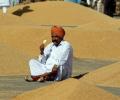
Rural budget set to increase; likely to enhance market linkages for agri commodities

Anil Rego, CEO, Right Horizons, answers your personal income tax queries.
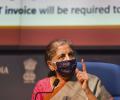
'Without reviving employment, consumer confidence will not go up.'
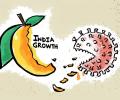
'In the real economy, the scars of the pandemic will continue to define 2021.' 'It is still hard to tell the effect on unemployment, migrant workers, poverty, and the informal sector of the lockdown and of the pandemic,' observes Mihir S Sharma.

Tomar said the union leaders kept insisting on repeal of the three farm laws, but the government side tried to explain them the benefits of the Acts and sought to know specific problems faced by the farmers.
